From First Play To First Fan
How VibeCodingList creators can spot real community signals early. You ship a small game or tool. You write a quick description, upload a thumbnail, hit publish on VibeCodingList, then post the link on X or in Discord. For a day or two it is mostly quiet. A handful of plays. A couple of curious clicks. Nothing you would look at and say, “This is a community in the making.”
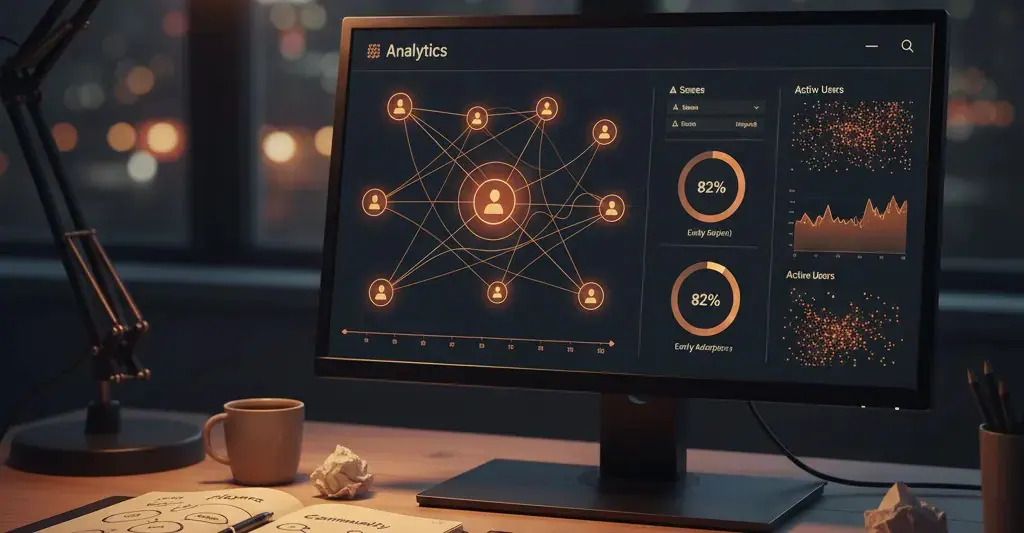
How VibeCodingList creators can spot real community signals early
You ship a small game or tool. You write a quick description, upload a thumbnail, hit publish on VibeCodingList, then post the link on X or in Discord. For a day or two it is mostly quiet. A handful of plays. A couple of curious clicks. Nothing you would look at and say, “This is a community in the making.”
Then something different starts to happen.
The same names keep showing up.
Someone plays again the next day.
Someone leaves a comment that is more than “cool.”
Someone else asks when the next update is coming.
It is not loud, but it is consistent. If you only watch the total traffic graph, you will probably miss it. If you zoom in, you realise this is where things actually begin.
I have watched that pattern repeat across a lot of different projects that started on VibeCodingList and then moved deeper into the Orange ecosystem. Different genres, different teams, different skill levels. The early community stage looks surprisingly similar.
This piece is about that stage. The space between your first play and your first fan. How to recognise it, how to support it, and how to use VibeCodingList plus a few simple tools to give those people somewhere to go.
This article is part of a broader series I am writing on Medium called The Creator Network, where I share what I see working for AI native creators building onchain. The longer version of this topic is here. This is the VibeCodingList cut, focused on what matters when your project is still a small prototype.
Forget virality for a minute and look for your “aha players”
When you launch something new, the default instinct is to stare at the big numbers.
How many people played.
How many views.
How many clicks from X.
Those numbers are not useless, but they are shallow. A spike of one time traffic feels good, then disappears, and does not tell you much about what to do next.
What matters more at the beginning is simple:
Did anyone reach the point where they actually felt what your project is about?
In product terms, that point is the “aha moment”. The moment where something clicks in their head and they think, “Oh, I get it, this is fun” or “This is useful.”
For different projects, it looks different:
- For a puzzle game, it might be finishing the first level and immediately hitting play again.
- For a narrative project, it might be reaching the first twist and wanting to see what happens next.
- For a tool, it might be creating and saving the first thing they are proud of.
Your version will not be “7 friends in 10 days” like the famous Facebook example, but there will be an equivalent pattern in your VCL data.
A few ways to spot it:
- Someone plays your project three times in the same week.
- Someone leaves feedback that clearly shows they understood the core idea.
- Someone plays, then comes back after an update and comments on what changed.
Those are your “aha players”. The first people who felt the value. The first ten to fifty of them will tell you more than five thousand drive by visitors.
So in the early days, your goal is not “go viral”. Your goal is:
Find your version of the aha moment and make it easier for people to reach it.
Everything else is secondary.
What early community actually looks like on VibeCodingList
When people hear “community” they often picture:
- A big Discord
- Crowded Worlds
- Hundreds of replies on X
The early reality is much smaller and much more fragile.
For most VCL projects, it starts as five to twenty people who keep showing up around your work.
You see:
- The same names in your VibeCodingList feedback.
- The same usernames liking or replying when you share a clip.
- The same couple of people asking when the next build is live.
It feels like:
- Someone posting a screenshot without being asked.
- Two regulars joking about the same bug they both hit.
- Someone dropping a small idea that could become a whole new feature.
From the outside, it does not look impressive. From the inside, it is the start of everything.
If you are looking at your VCL numbers and feeling discouraged because they are “too small”, it is worth zooming in. You might already be in the most important stage and not recognise it.
Three stages to watch for as a VCL creator
Looking across creators who started on VibeCodingList and then kept building on Orange, I keep seeing the same three stages.
The details change. The tools change. The pattern does not.
1. First plays
You have shipped something. People can touch it.
At this stage you are mostly looking at simple numbers: total plays, visitors, where they came from.
Your goal here is not maximising reach. It is answering a smaller question:
Will anyone come back for a second try?
One repeat player is more valuable than a hundred people who bounced after ten seconds.
2. Familiar names
Then something shifts.
A small list of regulars starts to appear. You recognise their usernames in your VCL dashboard. You see the same people pop up in your mentions on X or in a small chat where you share updates.
This is the moment when community starts to move from abstract to real.
Your job changes too. You are no longer just watching analytics. You are interacting:
- Replying to comments instead of just reading them.
- Asking a regular what they liked and what confused them.
- DMing a link to an early build to someone who gave good feedback last time.
3. Shared space
The third stage is when your project has a clear “place” associated with it.
That place can be light:
- A single Telegram group.
- A small Discord server.
- A recurring World you use for playtests if you are deeper in Orange.
The important part is that people know where to go if they want to be closer to the project than just “I saw it on the VCL feed once”.
You have somewhere to host regular moments:
- Weekly play sessions.
- Short reveal nights.
- AMAs or office hours with a handful of people.
You do not need to rush this. Each stage gives you signals that make the next one easier.
A simple stack VCL creators can start with
You do not need a huge setup to support early community around your VCL project. In most cases, the tools are already around you. The trick is using them together with intention.
Here is a simple pattern that works well.
1. Treat your VCL listing as a live page
Do not treat VibeCodingList as a one and done submission.
- Update your description when you change core mechanics.
- Add a note when you push a new build.
- Pin one or two key links where people can go deeper, like a chat or X profile.
VCL is often the first touch. Make it obvious what happens after the first play.
2. Give people one clear place to talk
You do not need ten channels.
Pick one:
- A Telegram group if you want low friction.
- A starter Discord if you already know you need roles and channels.
Drop that link on your VCL page and in your X bio. That becomes home for early community.
3. Set a simple cadence
Momentum needs rhythm.
That can be as simple as:
- One regular playtest session each week.
- One short update post each week on VCL and X.
The form can change. The reliability should not.
4. Spend time with your regulars
Treat the first ten to fifty people who keep engaging as collaborators, not just numbers.
- Ask what they liked and what felt off.
- Invite a few into early test builds.
- Share small behind the scenes updates with them first.
Those people will carry your project further than any one big spike on social.
Common mistakes that kill early momentum
A few patterns show up again and again:
- Waiting for a “big enough” audience before doing anything live. You do not need fifty people to run a session. You can start with five. - Opening every possible channel at once. X, Telegram, Discord, three Worlds, side projects. Everything exists. Nothing feels alive. - Caring more about follower count than repeat behaviour. If someone follows you but never plays or returns, they are not community. They are background noise. - Changing direction every week. If you keep rewriting the concept or the schedule, regulars never know what to expect.
The fixes are boring and effective: fewer surfaces, more consistency, more attention on the people who are already here instead of the ones who might show up “later”.
Where this fits in the Creator Network
This VibeCodingList version sits alongside the wider Creator Network series I am writing on Medium for creators building on Orange. The series looks at launching early, thinking clearly about tokens, growing communities, and turning small projects into living onchain economies.
If you want to follow along as I share more of what I am seeing across VCL, Orange, and the broader creator ecosystem, you can find the series here.