I was first for “PaperTrack” and missing from every question that mattered
Ranking for your own name isn’t discovery. People find tools by asking questions, so build the pages that answer those questions, then measure engagement, not visits.
The decision or problem
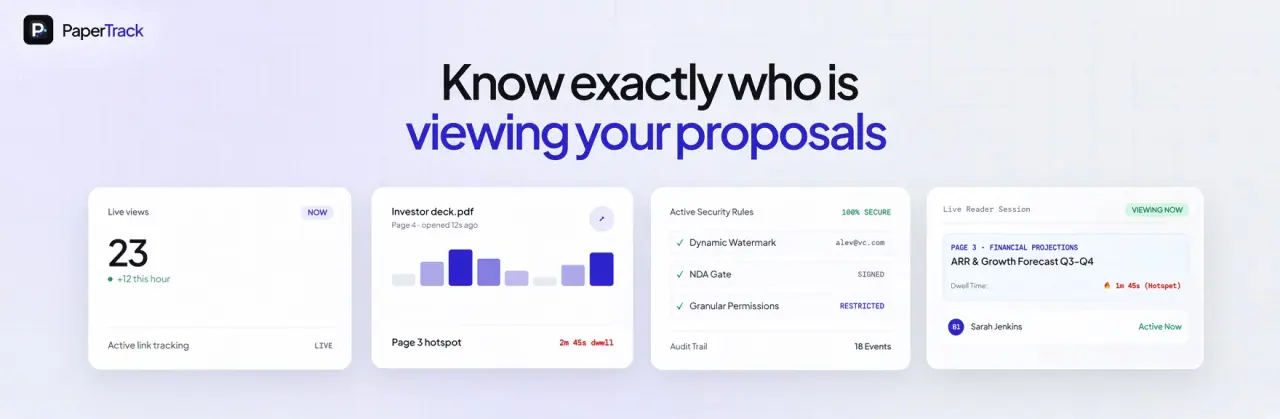
I was building PaperTrack, a secure document sharing and data room tool with page-by-page analytics, as a cheaper alternative to DocSend. The product was live and the landing site looked fine. Search my name and I came first, so I assumed discovery was handled.
It wasn’t. I checked the questions founders actually type: “docsend alternatives”, “how to see who viewed my pitch deck”, “affordable virtual data room”. PaperTrack wasn’t in any of the answers. The site worked as a brochure for people who already knew the name. Nobody else was finding it.
What happened
In about 55 days the site got 728 unique visitors, roughly 15 sessions a day. Traffic was small, so I read it for quality instead of volume:
- About 8% of visitors went into the app, and app bounce was around 31%.
- Google organic was only 13% of sessions, but those visitors stayed the longest.
- A handful of visits from ChatGPT read dozens of pages each.
- A small Google Ads test brought clicks with shallow sessions, so I stopped treating it as the plan.
So I changed what the site is. Instead of one landing page, I built pages for the exact questions people ask: comparison pages (DocSend, Papermark and others), guides like “Who viewed my pitch deck?”, and a cost calculator. I also listed PaperTrack in the directories and alternatives sites that Google and AI answers cite, and added an llms.txt file as an experiment. I can’t say yet whether AI tools actually use it, so I’m treating it as a small bet, not a fix.
Is it working? It’s early, and I’d be careful about calling it proof. Google rankings for the new pages haven’t settled yet. What I can say so far: ChatGPT has sent me four users, two of them paying customers and two on the free plan. Four users is a signal, not a trend.
What I would pass on
- Search your own name, then search the question. Being first for your brand tells you nothing about being found.
- Look at who Google and AI answers name for your category. Those are the pages to be on.
- Read small numbers for quality. At 15 sessions a day, depth of engagement says more than visitor counts.
- Write comparison and how-to pages before more features. They’re the cheapest distribution I found.
- Keep every claim on the site checkable. If you compare against a competitor, state the price source and date.
- Then talk to the users who got in. More content can’t tell me why people stop before paying. The first few customers have already shown me things no analytics did, like which claims on my site didn’t match the product.